


Ask the Experts: Your Fertility Nutrition Questions Answered
From egg quality and supplements to IVF prep and male fertility, our nutritionists Isabelle and Raquel are answering your questions live. Tune in or send yours in advance.
YOUR CART IS EMPTY
 Third-Party Tested

Choline
£17.95
Capsule

Femceive
£34.95
Capsule

Vital DHA
£20.50
Capsule

Vitamin D Spray
£13.50
Spray
Third-Party Tested
Article
Posted on
An important update: On 12 May 2026, an international consensus published in The Lancet renamed Polycystic Ovary Syndrome (PCOS) to Polyendocrine Metabolic Ovarian Syndrome (PMOS). The new name reflects what we now understand about the condition's wider hormonal effects. Both names will be used during the transition to the 2028 ICD update. Read our explainer on what the rename means for your hormones and fertility.
Last updated 18 August 2026.
Nutrition and supplements are intended to support overall hormonal and reproductive wellbeing as part of a wider lifestyle approach. They are not a treatment, cure or guarantee of ovulation or pregnancy.
If you have PMOS (PCOS) and you're trying to conceive, it's easy to feel overwhelmed by the sheer number of nutrients that come up in conversation: inositol, folate, vitamin D, NAC, omega-3, fibre, gut health. Each one is discussed for a reason, but working out which matter for you, and how they fit together, can feel like a research project on top of everything else you're managing.
This article explains which nutrients are commonly recommended for PMOS when trying to conceive, why each one is relevant, and how they relate to one another. For a broader overview of PMOS, its effect on fertility and the support options available, visit our PMOS fertility support hub.
Supplements cannot treat or cure PMOS (PCOS), and they cannot guarantee ovulation or pregnancy. They are best thought of as one part of a broader approach that also includes diet, lifestyle and appropriate clinical care.
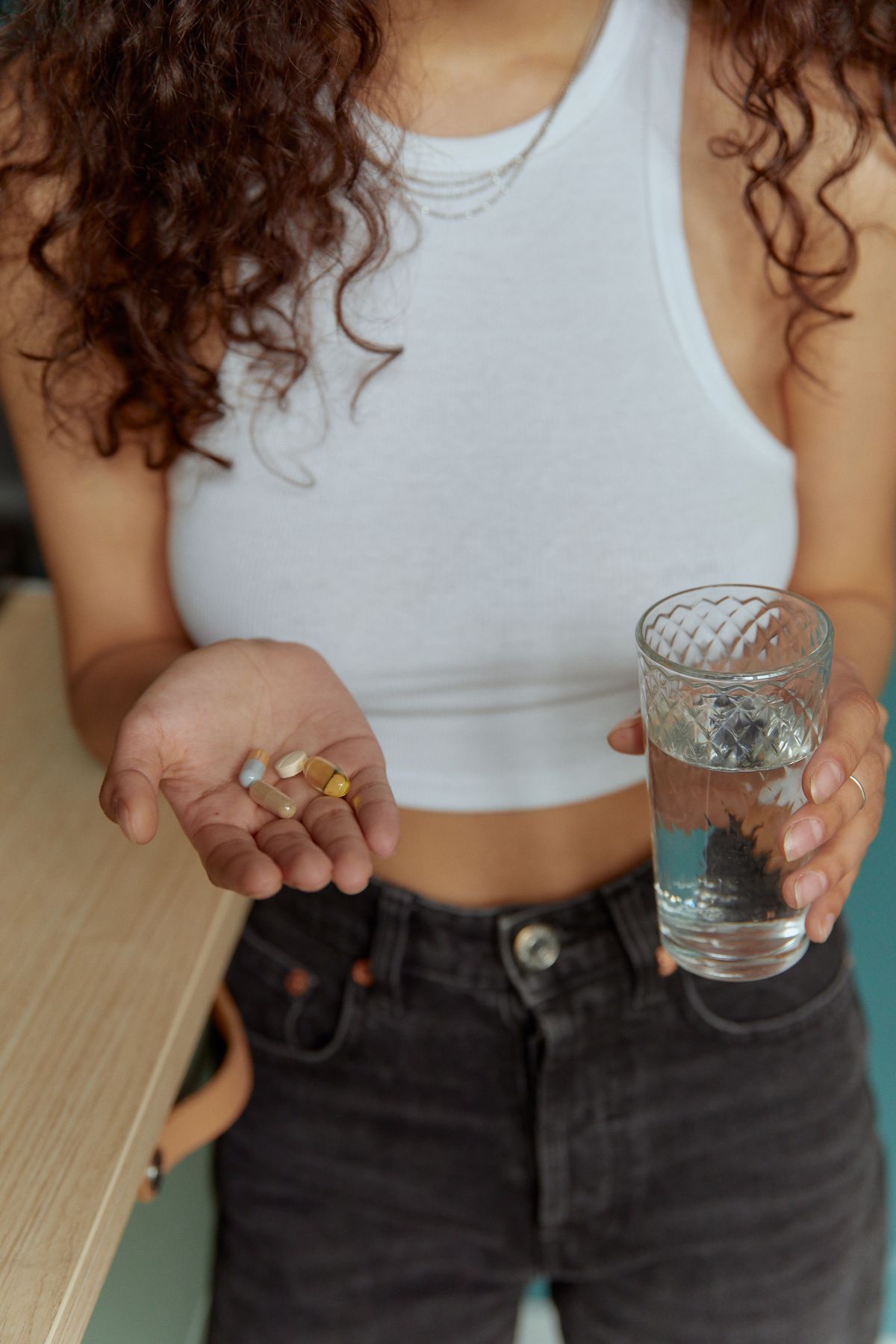
Nutrients commonly discussed in PMOS fertility nutrition include myo-inositol, vitamin D, NAC, omega-3, a fertility multivitamin, gut support and fibre. Together, these target the areas PMOS most often affects: insulin sensitivity, ovulation, hormone balance, antioxidant status, gut health and inflammation.
Myo-inositol is one of the most studied nutrients for PCOS, relevant because insulin resistance is a common metabolic feature of PMOS. Folate is an essential preconception nutrient for all women trying to conceive, recommended by the NHS. The Zita West Inositol and Folate product combines both using Quatrefolic methylfolate.
Myo-inositol is widely discussed in relation to inositol and insulin resistance in PCOS, because insulin signalling is closely linked to ovarian function in PMOS. The 2023 international PCOS guideline notes that inositol may be considered according to individual preferences.1
Folate, meanwhile, is recommended for all women trying to conceive, regardless of PMOS status, because of its role in cell division and neural tube development in early pregnancy. Our guide on folate covers this in more depth. The Zita West Inositol and Folate product brings both nutrients together in one formula, using Quatrefolic methylfolate rather than folic acid.
When taken as part of the PMOS Support Pack alongside Vitafem, the folate levels across both products have been considered together by our nutrition team. You do not need to worry about duplicating nutrients within the pack.

Combines myo-inositol with Quatrefolic methylfolate, formulated with PMOS and irregular ovulation in mind. Designed to be taken alongside, not instead of, a foundation multivitamin.
Shop Inositol and FolateBeyond inositol and folate, PMOS is commonly discussed alongside several other nutritional considerations: vitamin D status, oxidative stress, inflammatory balance and gut health. Each of the areas below plays a different role, and not every nutrient will be equally relevant to every woman.
Low vitamin D is common in women with PMOS. It's relevant to hormone health, immune function and menstrual cycle regularity.
Vitamin D status is worth reviewing as part of a PMOS routine, ideally alongside a blood test or GP advice, since individual requirements vary. Our guide on folate, vitamin D and PCOS covers this in more detail, and NHS guidance recommends most adults consider a daily vitamin D supplement, particularly in autumn and winter.2
NAC is a glutathione precursor. It addresses oxidative stress and metabolic health, both commonly elevated in PCOS.
A number of clinical studies have looked at NAC in women with PCOS, including its relationship to insulin sensitivity and metabolic markers.3 Our guide on NAC and PCOS explains the research in more depth.

A glutathione precursor commonly reviewed by women with PMOS as part of a broader approach to antioxidant status and metabolic health.
Shop NACDHA and EPA are relevant to inflammatory balance, cell structure and hormone pathways.
Omega-3s are discussed in relation to managing PCOS symptoms, particularly where inflammation is a consideration alongside insulin resistance. Ultra Omega is a fish-sourced option providing both EPA and DHA for women reviewing their omega-3 intake as part of a PMOS routine.

Psyllium husk is included in the PMOS pack specifically because of research around its role in supporting blood sugar balance and insulin resistance, both central to PCOS and PMOS management.
Adequate dietary fibre supports gut function, slows glucose absorption and may help moderate the blood sugar fluctuations associated with insulin resistance in PCOS. A trial of high dietary fibre intake in people with type 2 diabetes reported improvements in glycaemic and lipid markers, which is part of why fibre is discussed in this context.4

A gentle fibre supplement included in the PMOS pack for its relevance to blood sugar balance and digestive function.
Shop Psyllium HuskFemceive is included in the PMOS Support Pack to support the gut and vaginal microbiome. These areas are relevant to nutrient absorption, immune function and hormonal wellbeing, which can all form part of a wider PMOS fertility plan.
| Nutrient | Primary role in PMOS | Why it matters for fertility |
|---|---|---|
| Myo-inositol | Insulin sensitivity, ovarian function | May support more regular ovulation |
| Folate | Cell division, preconception support | Essential before and in early pregnancy |
| Vitamin D | Hormone health, immune function | Commonly low in women with PMOS |
| NAC | Antioxidant status, metabolic health | Addresses oxidative stress in PCOS |
| Omega-3 | Inflammatory balance, cell structure | Supports hormone pathways |
| Psyllium husk | Blood sugar balance, gut function | Supports insulin sensitivity management |
| Femceive | Gut and vaginal microbiome | Relevant to hormonal and immune wellbeing |
Yes. The Zita West PMOS (PCOS) Support Pack was formulated by our in-house nutrition team specifically for women managing PMOS. Every product in the pack is designed to be taken together. There are no interactions between the supplements.
If you're adding supplements from other brands to your routine, or already take prescribed medication such as metformin, it's worth checking with a GP or pharmacist first, or booking a free 1:1 product consultation with our team so we can review your full routine together.
There are no interactions between the supplements in the Zita West PMOS Support Pack. You can take them in any order that suits your routine, ideally with meals.
Some women prefer to start with one or two products and build up gradually, rather than beginning with the full pack. This is a reasonable approach, particularly if you're already taking some of these nutrients. You can explore the individual products in our PMOS supplement range and add to your routine as feels right for you.
| Product | What it provides | Why it is included for PMOS |
|---|---|---|
| Vitafem | A fertility multivitamin with active folate, vitamin D, iron, zinc and selenium | Provides a broad preconception nutritional base |
| Inositol and Folate | Myo-inositol with Quatrefolic methylfolate | Supports insulin sensitivity and ovarian function |
| Vitamin D Spray | An oral vitamin D spray, three-month supply | Supports hormone health and immune function |
| NAC | N-Acetyl Cysteine, a glutathione precursor | Supports antioxidant status and metabolic health |
| Ultra Omega | Fish-sourced omega-3, EPA and DHA | Supports inflammatory balance and hormone pathways |
| Psyllium Husk | A gentle daily fibre supplement | Supports blood sugar balance and gut function |
| Femceive | A microbiome supplement for the female reproductive environment | Supports gut and vaginal microbiome health |
The pack is one month's supply, with the exception of the Vitamin D spray which provides three months. All products are designed to be taken together.
Explore the PMOS (PCOS) Support Pack
The clearest starting point is myo-inositol with folate, vitamin D and a fertility multivitamin. These cover the most commonly discussed nutritional gaps in PMOS. The Zita West PMOS Support Pack brings all of these together in a single expert-curated routine. If you're unsure, book a free 1:1 consultation.
If you're using the Zita West PMOS Support Pack, this has already been considered for you. The pack was formulated so all products work together without problematic overlap. If you're adding supplements from other brands, check with a healthcare professional or book a consultation with our team.
PMOS and PCOS refer to the same condition. PMOS is the updated clinical name introduced in 2026. Both names will be used until 2028, and the nutritional approach discussed here is the same regardless of which name you see used. Read more in our guide on why PCOS has been renamed PMOS.
Yes. PMOS can disrupt ovulation, which may make it harder to identify fertile days and can extend the time it takes to conceive. Not all women with PMOS find it difficult to conceive. If you've been trying for 12 months, or 6 months if you're over 35, speak to your GP.
Yes. Myo-inositol is one of the most widely discussed nutrients for PCOS and PMOS because of its role in insulin signalling and ovarian function. The 2023 international PCOS guideline notes it may be considered according to individual preferences.1
Yes, particularly if you take prescribed medication such as metformin, or are preparing for IVF. For general preconception support without a complex medical background, a free 1:1 consultation with a Zita West nutritionist is a helpful first step.
Supplements are not a treatment for PMOS (PCOS) and do not guarantee ovulation or pregnancy. They are most effective when chosen thoughtfully and used alongside appropriate nutrition, lifestyle and clinical care.
Medical disclaimer: this article is for general information and does not replace personal advice from a GP, midwife, fertility clinic or qualified healthcare practitioner, especially if you are pregnant, breastfeeding, taking medication or undergoing fertility treatment.

From egg quality and supplements to IVF prep and male fertility, our nutritionists Isabelle and Raquel are answering your questions live. Tune in or send yours in advance.

